
PORT ELYSIUM
Access to the Port Elysium portal is restricted to approved partners who have executed a non-disclosure agreement.
Request Access ← Back to Port Elysium
Access to the Port Elysium portal is restricted to approved partners who have executed a non-disclosure agreement.
Request Access ← Back to Port ElysiumThe Long Island Blue Restoration Programme will assess the island's degraded lagoons and, where the evidence supports it, restore tidal circulation and water quality, regenerate mangroves, protect seagrass and grow coral in the estate's own lagoons. Restoration money pays first; carbon credits are a possible later income, never the reason for the work.
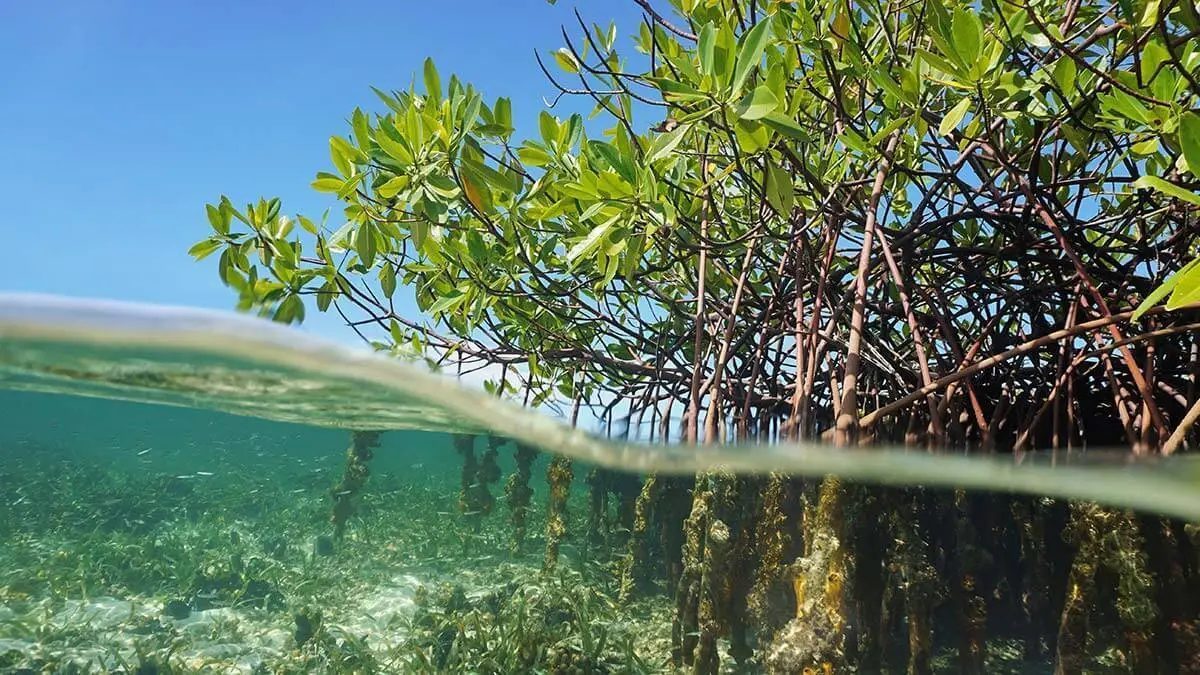
Salt works, canals, dykes and causeways restricted the flow of seawater along Long Island's coast. Runoff from the 2007 floods, trapped by that poor circulation, created a "dead zone" that may take decades to recover, and the 2008 State of the Coast survey judged that about 120 km² of over-salty lagoon is likely to need a major mitigation project. That figure describes the size of the problem, not a project area.
Port Elysium will lead a programme to bring these lagoons, mangroves and coastal waters back, as a lasting commitment to the island and to future generations.
Improve links to the sea only where hydrological study shows a benefit; sometimes the right answer is to do nothing.
Restore the tidal conditions mangroves need, then natural recruitment and nursery-grown planting where it will survive.
Follow from healthier lagoons and mangroves, and are monitored as an outcome.
Protection and monitoring, not restoration, with data shared with the national programme.
Research and coral nurseries in the estate's own lagoons, with research partners.
Long-term monitoring, field courses, published data and carefully managed nature visits.

The work is paid for first by money that does not depend on carbon credits: government and conservation grants, philanthropic foundations, university research funding and corporate sponsors of named restoration work.
The Bahamas' 2024 debt conversion provides about US$124 million over 15 years for marine conservation; whether Port Elysium, the programme or its sites qualify is still to be confirmed. Development and low-cost finance follows feasibility, and advance carbon sales and return-seeking investors come only once there are proven sites, secure rights and credible income. Until then, this is a programme, not a fund.
Port Elysium will screen a portfolio of sites across Long Island, from private land it may acquire to Crown land under long-term lease and Government-led sites, and rank them before committing to any. A pilot's size is set by feasibility work, not in advance. Port Elysium proposes to work alongside the national Blue Carbon Programme, launched on 24 September 2026, and will seek an appropriate Long Island role.
One Port Elysium Natural Capital Platform, inside the holding company, runs the Blue and Green programmes. Each is ring-fenced, with its own budget and accounts, and a board with independent science and community members and a science and safeguards committee that can reject a site are built in from the start.